RiverPatrol wrote: I didn't (and don't recommend) replace the valve seats. On a Patrol engine it really isn't necessary. I don't even use lead additive. The lead or hardened seats are necessary for high performance and high compression engines. The P engine is certainly not that.
Having done my own valve job before I experienced the amazing amount of material that can be ground off a valve and keep it within tolerance. I'm surprised that all of the exhaust valves would need replacing.
Well, it was bound to happen sooner or later, but here is where I will have to (partly) disagree with the Patrol gurus...

True that Lead raises octane, and so the elimination of lead from gas has a greater
performance impact in higher compression engines, but that is only half the story...
Leaded fuel also left behind residual salts in the combustion chamber that would compress and compact themselves on the valve seats as the valves opened and closed; and over time these compacted deposits would form a hardened (almost ceramic) coating on the valves and their seats, which worked to prevent premature wear (also called valve recession). These benefits were more greatly seen on the exhaust side, and valve recession is usually more pronounced on the exhaust side when original soft valve seats are used with unleaded fuel.
So, running unleaded gas in
any engine with non-hardened valve seats will eventually lead to the kind of accelerated exhaust valve and valve seat wear that John's machinist is seeing... It's all just a matter of time and usage - since most Patrols are not going to be 20k mile per year daily drivers, it may take decades for any notable valve recession to occur, but it WILL happen eventually.
It is also true that valve recession is most pronounced on engines with 150k + miles, and once upon a time, I seem to remember reading somewhere that valve recession occured at a graduated non-linear rate, meaning that the more miles on the engine (and the more worn the valves were), the faster the rate of valve wear would accelerate.
I went back and looked at John's pics of his cylinder head, and I do see some evidence of exhaust valve recession, but it is not extreme, which would look like this:
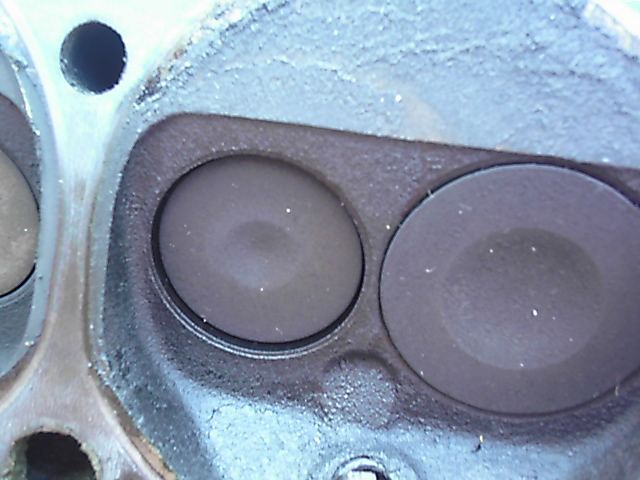
So, the decision whether to endure the cost of using hardened seats or not should not be based on another person's recomendation (IMHO

); but should instead be based on a realistic expectation of how many miles per year you plan to rack up on the engine, and how many miles you want it to last before it's going to need another valve job.
Perhaps RP and Esteban are correct that hardened valve train parts aren't a mandatory (or cost effective) consideration, if a 100k mile lifespan on the cylinder head is going to be acceptable to you.
And I also agree with Esteban that doing hardened seats without hardened valves would only be half as good, but half as good is still 100% better that not doing either one...

Another 2 pennies, thrown into the well of public opinion...


 I am no mechanic. I have learned from copying and direction from other Patrollers. BUT.....


